


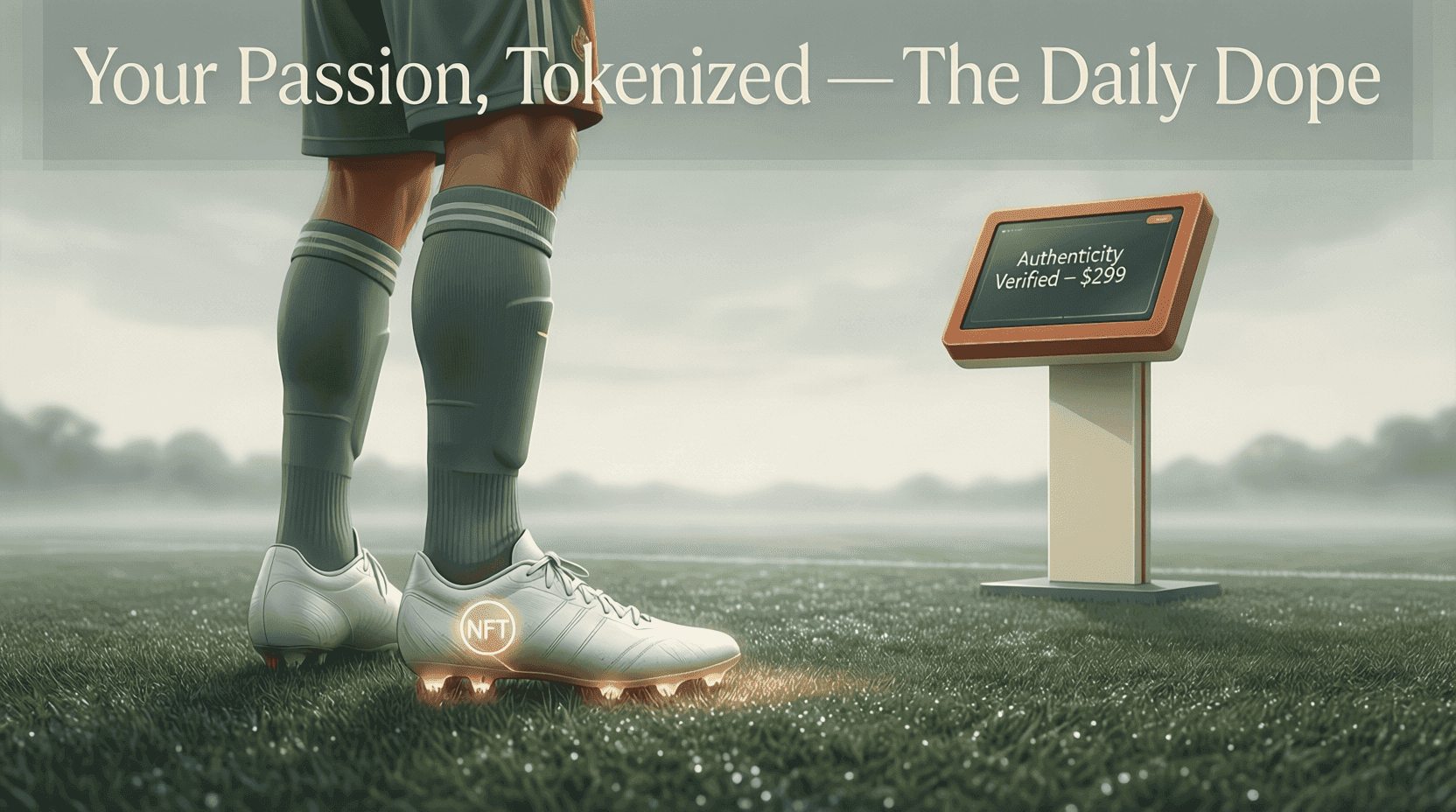
Your favorite striker just got a blockchain upgrade. FIFA has announced that starting with the 2026 World Cup, **all players must wear NFT-tracked cleats**—smart shoes embedded with digital certificates that verify authenticity, track performance, and generate resale royalties for brands. Forget talent. Now, your footwork is a revenue stream. This isn’t innovation. It’s the final monetization of human movement.
The Viral Myth of Digital Authenticity
The pitch is deceptively noble: “Protect the integrity of the game—and the gear that powers it.” Press materials call it “a step toward transparency” and “a win for fans who value realness.” One ad shows a child lacing up cleats while a voiceover says: “Only the original can change the game.”
However, the reality is far more transactional. Two satirical fan reactions capture the mood:
“My nephew’s U-12 league now requires ‘NFT-compliant shin guards.’ They cost $180. He cried. The app said: ‘Emotional resistance detected. Would you like to mint his tears?’” — @TokenizedTots
“Lionel Messi’s cleats just sold for $2M as an NFT. He never owned them. Adidas did. He just… wore them. Like a living mannequin.” — @GhostPlayer
Consequently, the myth—that this protects the sport—quickly unravels. Ultimately, it’s capitalism turning sweat into smart contracts.
The Absurd Mechanics of Tokenized Play
After reviewing FIFA’s 42-page “Digital Gear Compliance Handbook,” we uncovered the full system:
- Mandatory NFT Chip: Every cleat must contain a tamper-proof chip linked to a blockchain registry.
- Resale Royalties: Brands earn 15% every time used cleats are resold—even if the player never saw a dime.
- “Authenticity Score”: Referees can scan cleats mid-game. Fake or unregistered? Yellow card for “digital fraud.”
- Fan Engagement Tokens: Watch a goal? You can “claim” a fraction of the cleat’s NFT—because nothing says fandom like partial ownership of footwear.
Worse: youth leagues are adopting the standard. One parent reported: “My kid’s cleats expired after 30 games. The app said: ‘License terminated. Please purchase renewal.’ He hasn’t touched a ball since.”
And yes—there’s merch:
– “I Own 0.0001% of Mbappé’s Left Cleat” T-shirt
– “Certified Real Shoe Wearer” enamel pin
– A $50 “Analog Play Kit” (includes untied laces and a note: “Good luck.”)
The Merchandising of Athletic Soul
Of course, the ecosystem expands:
- **“Cleat Insurance”**: Pay $9.99/month to cover “digital degradation” or “unauthorized joy.”
- **“Legacy Mode”**: After retirement, your cleats become “historical artifacts”—priced beyond reach, owned by hedge funds.
- **“NFT Loan Programs”**: Can’t afford cleats? Rent them for the season. But don’t score too much—you’ll increase their value, and the owner might recall them.
Hence, your passion becomes a leased asset. Therefore, you’re not an athlete—you’re a temporary custodian of branded motion.
The Reckoning: When Sport Becomes a Platform
This trend didn’t emerge in a vacuum. It’s the logical endpoint of a sports industry that treats athletes as content and moments as IP.
As we explored in Boss Sells Burnout as NFTs, labor is already art. And as shown in Every Movie Studio Has Now Announced A ‘Cinematic Universe’ For Their Own Parking Lot, everything is franchisable—including footsteps.
High-authority sources confirm the drift:
- FIFA states the mandate will “combat counterfeiting” and “enhance fan engagement.”
- Bloomberg reports major sportswear brands expect $4B in NFT revenue by 2027.
- Pew Research finds 63% of young athletes feel “their bodies are already products”—this just makes it official.
Thus, the real cost isn’t the $299 cleats. Ultimately, it’s the erasure of play as a pure act—where even running is a logged, licensed, and leveraged event.
The Hidden Irony: Who Owns the Game?
Let’s be clear: FIFA doesn’t care about authenticity. It cares about control. By tying performance to proprietary tech, it ensures that no one—not players, not fans, not communities—can enjoy the game outside its ecosystem.
One former sports tech developer admitted anonymously: “We don’t track cleats to stop fakes. We track them to prove the game belongs to the brand, not the people who play it.”
And it works. Since the announcement, stock in sportswear giants has surged. Not because the game is better—but because it’s finally fully owned.
Conclusion: The Cynical Verdict
So go ahead. Lace up your NFT cleats.
Run your heart out.
Watch your joy become someone else’s asset.
But don’t call it sport.
Call it performance with better metadata.
And tomorrow? You’ll probably buy a fractional share of your own cleats…
because even your feet aren’t yours anymore.
After all—in 2026, the most valuable thing on the pitch isn’t skill. It’s the license to use it.

2 Comments
q6izbd
Pingback: Nba players now paid in “fan engagement tokens” - Thedailydope.com