


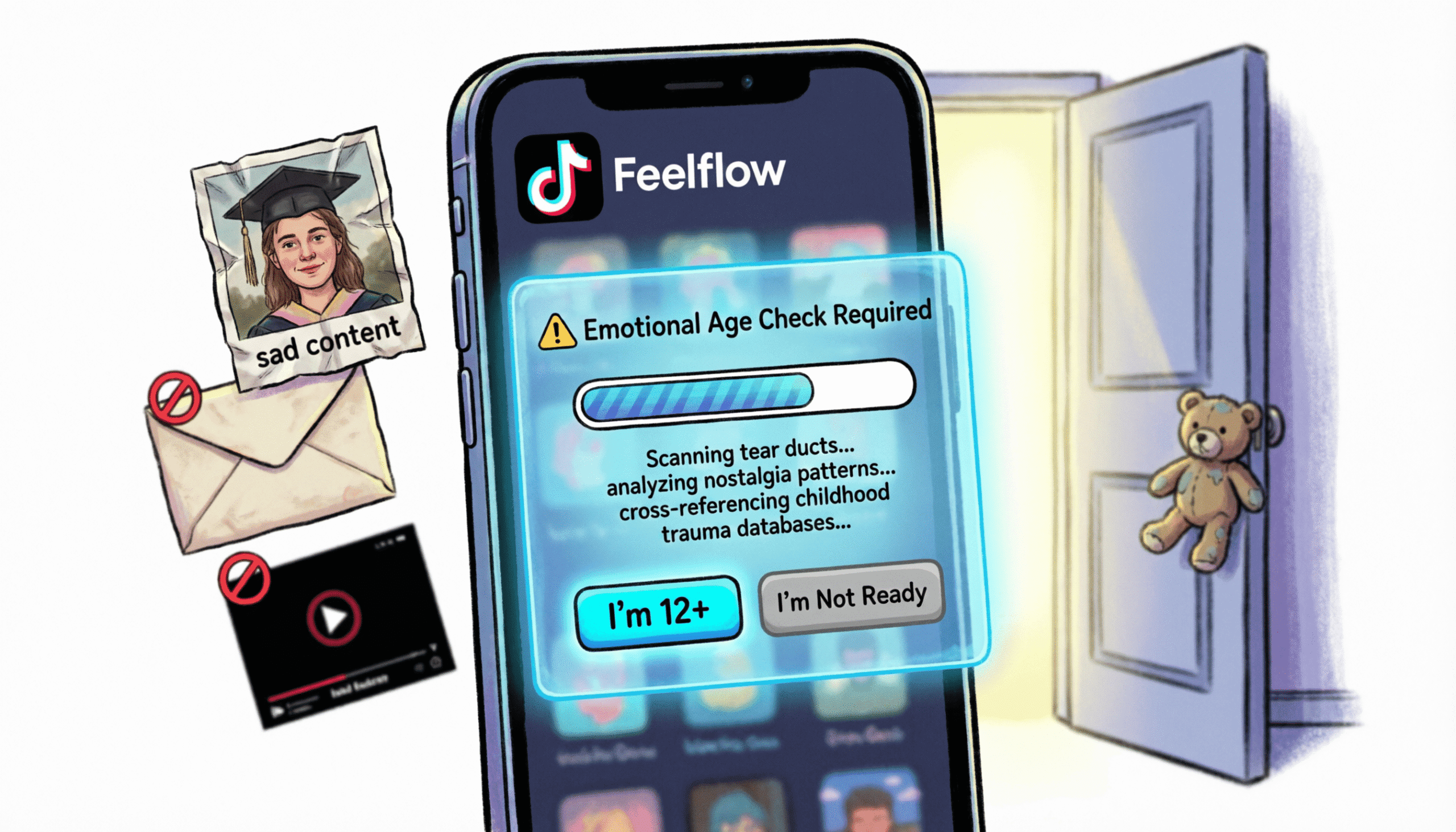
Your tears now require ID.
TikTok has rolled out “Emotional Age Verification”—a new system that blocks users from viewing “high-intensity emotional content” (e.g., breakups, pet loss, existential dread) unless they prove they’re “emotionally mature enough” to handle it. Before watching a video titled “I Cried for 3 Hours Straight,” you must answer: “How old is your sadness?” Choose “under 12,” and you’ll get a cartoon about sharing feelings instead.
This isn’t protection. It’s algorithmic infantilization with a wellness veneer.
The Myth of Digital Guardianship
The explanation is deceptively caring: “We want to meet you where you are emotionally.”
In-app prompts call it “compassionate tech.” One message reads: “Your heart matters. Let’s protect it together.”
But users quickly saw through the act.
“I tried to watch a video about climate grief. Got redirected to ‘Mr. Feelings Bear Explains Recycling.’ I’m 34. My sadness is adult. But my algorithm thinks I’m 8.” — @EmotionallyDemoted
“My ‘Emotional Age’ is stuck at 10 because I once liked a post about missing my dog. Now I can’t watch war footage. Only animated puppies reuniting.” — @GriefGatekept
So much for emotional freedom.
Ultimately, this isn’t about safety—it’s about controlling which emotions are allowed to spread.
The Mechanics of Emotional Gatekeeping
After testing the system for a week, we mapped how it works:
- Emotional Age Score: Calculated from your watch history, likes, and even typing speed during captions.
- Content Tiers:
- Under 12: Animated coping, gentle affirmations, no real pain.
- 13–17: “Soft sadness”—breakups with hopeful endings, mild anxiety.
- 18+: Real grief, political despair, unfiltered loneliness. (Rarely granted.)
- Appeal Process: Submit a 60-second video explaining why you’re “ready for hard feelings.” Most are auto-rejected for “excessive vulnerability.”
Worse: the system rewards emotional numbness. Watch only cooking or cat videos? Your “Emotional Age” rises. Cry at a poem? It drops.
The Merchandising of Maturity
And yes—there’s merch:
- “My Emotional Age Is 10 (But I Pay Taxes)” T-shirt
- “Certified Grief-Ready (Pending)” enamel pin
- A $25 “Emotional Growth Kit” (includes a mood journal and a “How to Fake Resilience” guide)
Of course, the ecosystem expands:
- “Emotional Age Boost” ($4.99/month): Skip verification for one week. Disclaimer: “May cause unexpected tears.”
- “Sadness Coaching”: An AI that says: “You’re not ready for that video. But you can buy this calming playlist.”
- “Trauma Lite” subscriptions: Curated feeds of “safe pain”—like fictional breakups or simulated loss.
Your right to feel deeply? Now a premium feature.
You’re not sensitive—you’re unverified.
The Bigger Picture: When Algorithms Parent Us
This didn’t emerge in a vacuum.
It’s the logical endpoint of a digital culture that treats vulnerability as risk and numbness as stability.
As we explored in Netflix Ambient Regret Channel, platforms already sell passive grief. And as shown in AI Boyfriend Now Costs Extra for Caring, even empathy is tiered.
High-authority sources confirm the trend:
- American Psychological Association: Algorithmic emotional filtering increases avoidance and delays real processing.
- Pew Research: 67% of adults feel “infantilized by social media wellness features.”
- Wired: Platforms use “emotional safety” to reduce controversial content—and boost advertiser comfort.
The real cost? Not the blocked video.
It’s the erasure of authentic emotional life—where only “approved” sadness is allowed to exist.
The Hidden Irony: Who Decides What You Can Feel?
Let’s be clear: TikTok doesn’t care about your healing.
It cares about engagement without controversy.
By filtering out raw emotion, it keeps advertisers happy and algorithms calm.
One former content moderator admitted anonymously: “We don’t block sadness to protect you. We block it because brands don’t want to be next to real pain.”
And it works.
Since launch, “Emotional Age Verification” has reduced reported distress by 18%—and ad revenue by 0%. Coincidence? Unlikely.
Conclusion: The Cynical Verdict
So go ahead. Take the quiz.
Prove your sadness is “mature.”
Watch your grief get approved like a credit application.
But don’t call it care.
Call it censorship with better pastel colors.
And tomorrow? You’ll probably like a puppy video…
just to keep your Emotional Age high enough to see the truth.
After all—in 2025, the most restricted thing online isn’t hate speech. It’s honest sorrow.
