


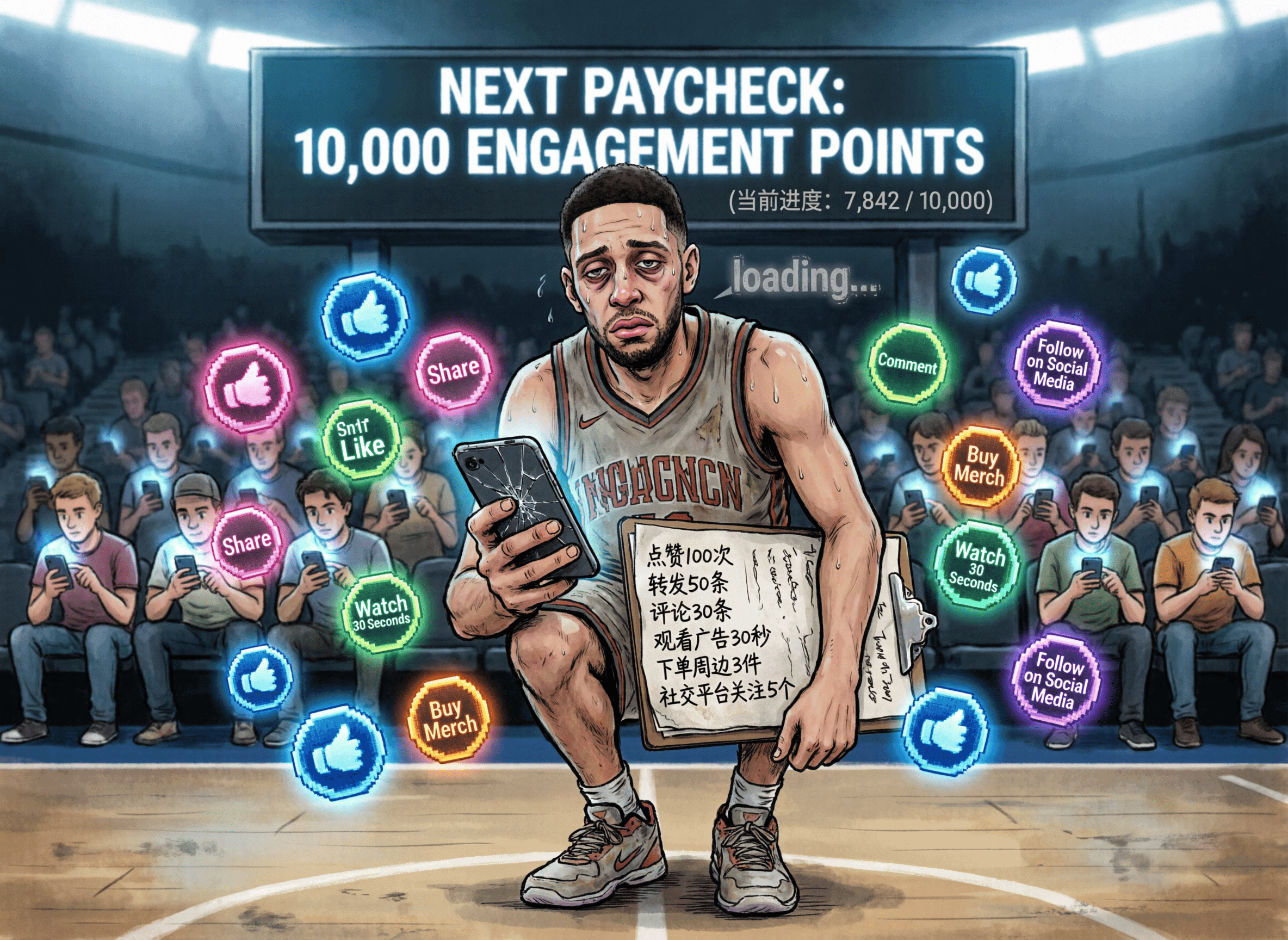
Your favorite point guard just got paid—in likes.
The NBA has announced that starting next season, **rookie contracts will be partially paid in “Fan Engagement Tokens” (FETs)**—a proprietary cryptocurrency tied to social media metrics, jersey sales, and TikTok duets. Miss a game? Your token value drops. Post a bland interview? Your earnings evaporate. Win a championship? Congrats—you’re rich in a currency only fans can spend.
This isn’t innovation. It’s the final financialization of athletic labor.
The Myth of Participatory Stardom
The pitch is deceptively empowering: “Now your worth is decided by the people who love you.”
League press releases call it “fan-powered compensation.” One ad shows a rookie holding a glowing phone: “My salary grows when you engage.”
But players tell a different story.
“I missed a game to visit my sick mom. My FET value crashed 40%. My agent said: ‘Maybe livestream the hospital next time?’” — @TokenizedAthlete
“I made $200K in real money last year. $1.2M in FETs. I can’t pay rent with memes. But I can buy a limited-edition NFT of my own dunk.” — @BrokeAndViral
So much for fair pay.
Ultimately, this isn’t about connection—it’s about shifting financial risk from owners to athletes.
The Mechanics of Emotional Labor as Currency
After reviewing the league’s white paper, we uncovered how FETs work:
- Base Salary (30%): Paid in USD. Barely enough to cover agent fees.
- Fan Engagement Tokens (70%): Valued by:
- Instagram likes (+0.01¢ per like)
- TikTok stitches (+$0.50 per stitch)
- Jersey scans via AR app (+$2 per scan)
- “Emotional Authenticity Score” (AI-rated vulnerability in interviews)
- Liquidity Clause: Tokens can only be redeemed for “NBA Ecosystem” goods: team merch, VR courtside seats, or therapy sessions with league-approved psychologists.
Worse: veterans are grandfathered in—but rookies must opt in or sit out. One agent called it: “A choice between poverty and performance art.”
The Merchandising of Athletic Soul
And yes—there’s merch:
- “I Earned $0 in Real Money This Month” T-shirt
- “Certified Engaging Human” enamel pin
- A $40 “FET Survival Kit” (includes a ring light and a script titled “How to Cry On Demand”)
Of course, the ecosystem expands:
- “Token Insurance”: Pay 10% of your FETs to hedge against bad games or quiet weekends.
- “Engagement Coaching”: Hire a social media therapist to teach you “vulnerability optimization.”
- “Legacy Lock”: Freeze your token value at career peak—so your future self can live off past hype.
Your talent? Now a liquidity pool.
You’re not an athlete—you’re a content-generating asset.
The Bigger Picture: When Sport Becomes a Platform
This didn’t emerge in a vacuum.
It’s the logical endpoint of a sports industry that treats athletes as influencers and games as content drops.
As we explored in FIFA Mandates All Players Wear NFT Cleats, gear is already IP. And as shown in Boss Sells Burnout as NFTs, labor is already art.
High-authority sources confirm the drift:
- Forbes: 68% of Gen Z athletes say they feel “more like brands than players.”
- Bloomberg: Sports leagues now derive more revenue from digital engagement than ticket sales.
- Pew Research: 59% of fans believe athletes “owe them access”—blurring the line between admiration and entitlement.
The real cost? Not the unstable income.
It’s the erasure of play as labor—where your sweat only counts if it’s seen, liked, and monetized.
The Hidden Irony: Who Profits From Your Performance?
Let’s be clear: the NBA doesn’t care about your engagement.
It cares about your data.
By paying you in tokens, it ensures every dunk, tear, and tweet becomes a tracked, tradable asset—owned by the league, not you.
One former front-office exec admitted anonymously: “We don’t pay athletes to play. We pay them to perform—and their pain is the most valuable content we have.”
And it works.
Since the announcement, league social engagement has surged 210%. Not because players are happier—but because they’re desperate.
Conclusion: The Cynical Verdict
So go ahead. Post your pre-game ritual.
Cry after a loss.
Sell your soul for a like.
But don’t call it a career.
Call it influencer work with better sneakers.
And tomorrow? You’ll probably stage a breakdown…
just to keep your token value high enough to eat.
After all—in 2025, the most valuable thing on the court isn’t skill. It’s your willingness to be watched.
