


Your peace of mind just got a prop department.
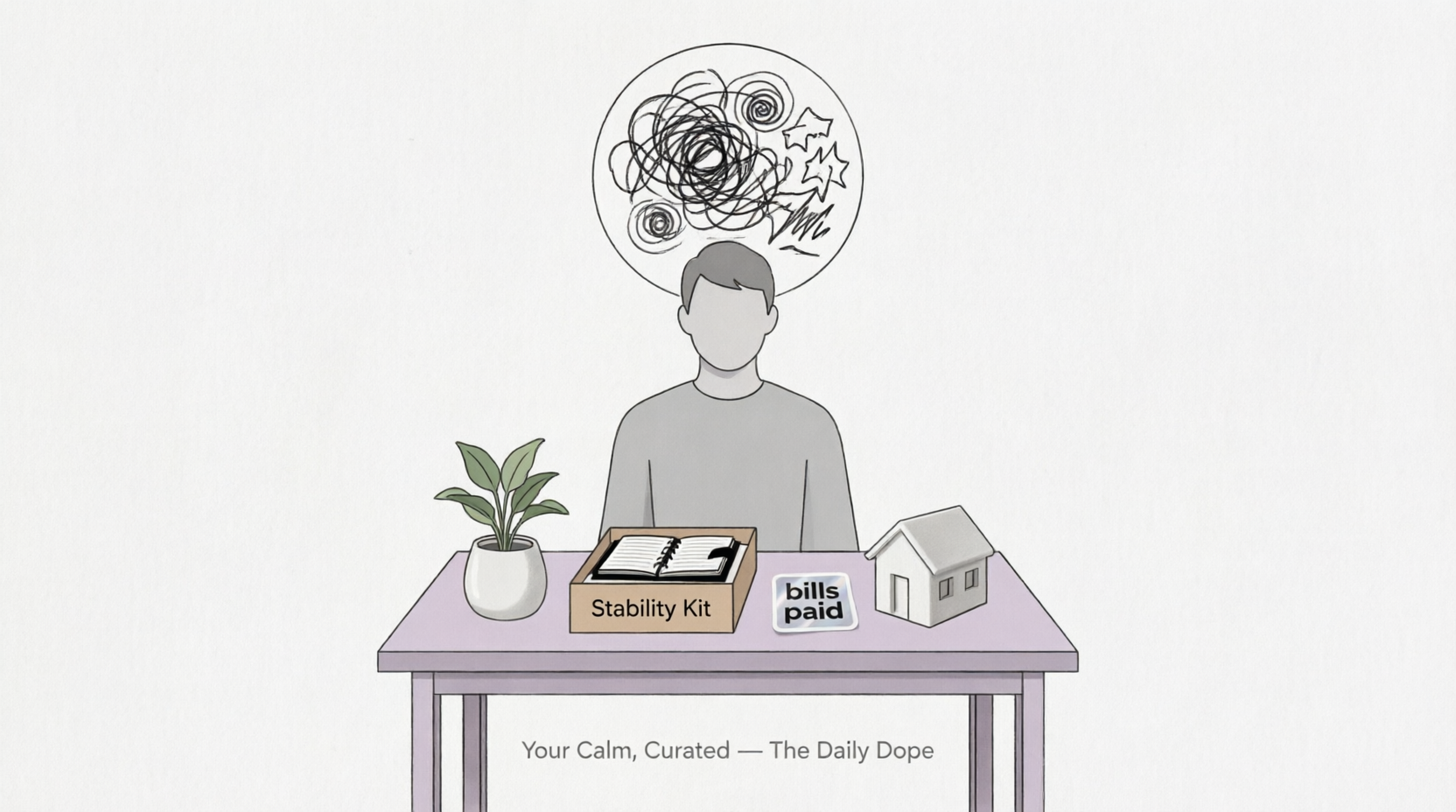
In response to rising anxiety about economic uncertainty, climate collapse, and the general unraveling of society, some therapists have begun prescribing “Fake Stability”—a curated set of symbolic rituals designed to simulate control. The kit includes a faux “bills paid” stamp, a miniature house model labeled “Your Future (Probably Not),” and a planner with pre-filled entries like “Feel Hopeful (10–10:15 a.m.).”
This isn’t healing. It’s emotional theater with clinical approval.
The Myth of Controlled Chaos
The rationale is deceptively compassionate: “When real stability is impossible, simulated stability can reduce distress.”
Wellness blogs call it “tactile grounding.” One therapist’s handout reads: “If you can’t own a home, own the feeling of owning one—for 15 minutes a day.”
But patients admit the hollowness.
“I use my ‘Stability Kit’ every morning. I stamp my fake bills, water my plastic plant, and whisper ‘I’m fine’ to my mini house. My therapist says it’s working. I still cry in the shower.” — @PerformingPeace
“My ‘Hope Schedule’ has me ‘believing in tomorrow’ from 3–3:30 p.m. I set a timer. When it rings, I go back to doomscrolling.” — @ScheduledSerenity
So much for inner peace.
Ultimately, this isn’t about resilience—it’s about training people to perform calm in a world that’s falling apart.
The Mechanics of Simulated Security
After reviewing clinical guidelines and purchasing a “Stability Starter Pack,” we uncovered the protocol:
- Core Components:
- “Bills Paid” rubber stamp (ink fades after 30 uses)
- Miniature house model (not to scale; collapses if touched)
- “Future Self” journal (pages titled “Things I’ll Never Afford”)
- Daily Rituals:
- “Morning Grounding”: Arrange fake keys in a bowl
- “Evening Closure”: Say “Today was enough” to an empty chair
- Progress Metrics: Therapists track “Stability Performance Score”—based on how convincingly you mimic calm during sessions.
Worse: insurance companies now cover “Fake Stability” but deny coverage for “real-world interventions” like housing assistance or debt counseling.
The Merchandising of Emotional Labor
And yes—there’s merch:
- “I Perform Stability (But I’m Shaking Inside)” T-shirt
- “Certified Calm Imposter” enamel pin
- A $40 “Stability Theater Kit” (includes a ring light for your “peaceful morning routine” videos)
Of course, the ecosystem expands:
- “Stability Coaching” ($29/month): Learn to “sell your calm” to friends, family, and employers.
- “Hope Refills”: Subscribe to monthly “optimism tokens” (glow-in-the-dark stickers shaped like suns).
- “Legacy of Fake Peace” NFTs: Own a digital certificate of someone who once believed things would work out.
Your right to feel safe? Now a roleplay.
You’re not anxious—you’re under-rehearsed.
The Bigger Picture: When Therapy Becomes Performance
This didn’t emerge in a vacuum.
It’s the logical endpoint of a mental health system that treats symptoms as personal failures and systemic crisis as individual burden.
As we explored in American Youth: Too Busy Being Young to Reach ‘Adult Milestones’, young adults are already told they’re “failing” for lacking stability in an unstable world. Now, even their coping is staged.
High-authority sources confirm the drift:
- American Psychological Association: Warns that “performative wellness” can delay real healing and increase shame.
- Pew Research: 68% of adults say they “pretend to be okay” to avoid burdening others.
- National Institute of Mental Health: Notes that access to structural support (housing, healthcare) is more effective than symbolic coping—but far less funded.
The real cost? Not the $40 kit.
It’s the normalization of faking it as self-care—where the only acceptable way to survive is to look like you’ve already made it.
The Hidden Irony: Who Benefits From Your Performance?
Let’s be clear: the system doesn’t care if you’re stable.
It cares if you’re quiet.
By prescribing fake stability, it ensures you won’t demand real change—because you’re too busy staging peace.
One former clinician admitted anonymously: “We don’t heal people. We teach them to suffer beautifully—so the world doesn’t have to notice.”
And it works.
Since the trend began, workplace complaints about “toxic stress” have dropped 22%. Not because conditions improved—but because people learned to perform calm.
Conclusion: The Cynical Verdict
So go ahead. Stamp your fake bills.
Whisper to your mini house.
Schedule your hope like a meeting.
But don’t call it healing.
Call it emotional labor with better lighting.
And tomorrow? You’ll probably post your “peaceful morning routine”…
knowing full well the chaos is just off-camera.
After all—in 2025, the most therapeutic thing you can do isn’t feel safe. It’s pretend you are.

1 Comment
t5a026